
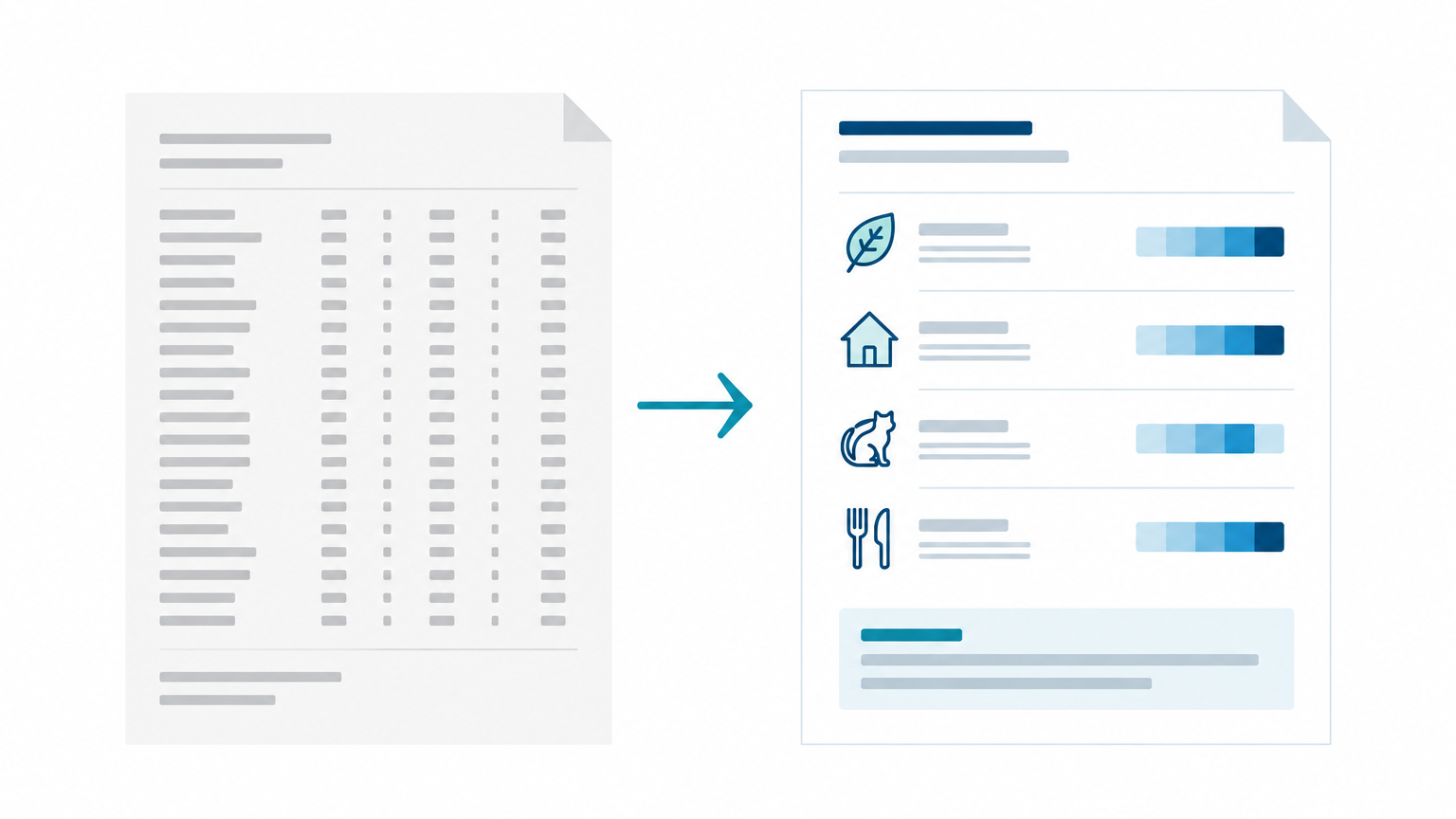
Allergy testing is one of the most technically mature services a laboratory offers. Modern analysers measure specific IgE against dozens, and on multiplex platforms hundreds, of allergens with excellent precision. The report that comes out the other end is accurate, structured and complete - and tailored primarily for professionals.
It is also, for most patients, very hard to use. The manufacturer’s report is designed around the laboratory workflow: allergen codes such as t3 or d1, a value in kU/L, a class number. It documents what was measured. It does not answer the questions a patient actually has when they open it:
- What does a positive result mean - am I allergic?
- Does a higher class mean a more severe allergy?
- Which of these findings actually matter?
- Where do I come into contact with these allergens, and what can I do about it?
Today, that gap is filled by consultations, phone calls and separate leaflets. This post looks at where patients most often get stuck with their allergy results, and at the reporting features we at LabToWellness have built to address each of those problems.
A positive result is read as an allergy
The single most important message in any allergy report is that a positive result shows sensitisation, not necessarily an allergy. Specific IgE confirms that the immune system has produced antibodies to an allergen; whether that causes symptoms depends on the patient’s history and exposure. Patients who miss this distinction tend to do one of two things: take unnecessarily drastic precautions - cutting out foods they tolerate perfectly well, giving up a family pet or avoiding the outdoors - or dismiss findings that do matter.
The fix is to settle this before the patient reaches a single number. The results section opens with a short, plain-language explanation page that defines the four terms patients need - allergen, IgE antibody, sensitisation, clinical allergy - and sets out the limits of the test honestly: result levels do not predict reaction severity, a negative result does not fully exclude allergy, cross-reactivity can produce findings that are not clinically relevant, and a laboratory result alone cannot diagnose an allergy.
Codes and classes hide what matters
A manufacturer’s report often lists codes in analyser order, so the patient has to work through every line before they can see the overall picture. The LabToWellness report puts that picture first with a cover-page summary - for example, 13 respiratory allergens tested, 7 with positive results, 4 with higher IgE levels - before the patient sees a single code.
The results pages then group allergens by source (pollen, house dust, animals, mould, foods) instead of listing them in analyser order. Each value keeps its standardised code and measured concentration, so nothing is lost for the clinician, but it is paired with a colour indicator and a word label - from “Not detected” through “Low” and “High” to “Extremely high” - that the patient can understand without a legend. Units, thresholds and classification systems are configured to match each laboratory’s technology.
Even clearly presented results do not tell patients how they relate to their own experience. The LabToWellness report closes that gap with a dedicated comment field directly below the results, which the clinician fills in for each patient: a few sentences that connect the profile to the patient’s own symptoms - why they struggle outdoors in summer, why their nose is blocked all year - and set out the agreed treatment and next steps.
Generic advice does not fit the patient’s results
Knowing what they are sensitised to still leaves patients asking what to do about it, and the usual answer is a generic leaflet covering every allergen on the panel. “Living with…” pages replace it with guidance that explains, for each relevant finding, where the allergen is commonly encountered, typical symptoms, practical ways to reduce exposure indoors and outdoors, and when to seek medical advice. Additional pages on topics such as travelling or eating out with allergies can be added to the report.
Crucially, this content is finding-based. Predefined rules decide which pages are included, so a patient sensitised to birch and dust mites receives pollen and dust guidance - and nothing on allergens that are not relevant to them.
Cross-reactivity is where unexplained results cause the most confusion. A patient sensitised to tree pollen may notice itching in the mouth after eating a raw apple or hazelnut; a patient sensitised to dust mites may react to shellfish because of a shared protein, tropomyosin. The report explains these links in plain language - and states clearly that cross-reactivity alone is not a reason to avoid foods unless they cause symptoms or a healthcare professional advises it.
A layer on top of existing laboratory and clinic workflows, not a replacement
A better patient report should not mean changing validated processes. LabToWellness does not change the laboratory result or replace the analyser software. The patient report is a separate, patient-facing layer built from the same analytical data; the analyser’s own report remains the authoritative clinical record.
The platform is configurable to the service a laboratory already runs: different panel sizes and allergen groups, molecular components, technology-specific units and thresholds, client terminology and branding, and multiple languages. Data can arrive through a simple upload file or an API integration, and reports are delivered as branded PDFs in the same visual style as the clinic’s other patient reports.
What it changes for the clinic
- A more valuable, differentiated allergy service - a branded product, not a printout that looks like every competitor’s
- Fewer routine follow-up questions and less manual explanation
- Consultations that focus on management and next steps, not on decoding classes
- Consistent quality across panels, analysers, locations and languages
How we set it up together
We start with the allergy service you already provide: your panels, testing technology, existing result files and the information patients currently receive. LabToWellness then adapts the report structure, content and design, and your laboratory and medical teams review and approve all medical content. Once the report is tested, we configure the data connection and go live.
See it with your own panel
If your laboratory or clinic offers allergy testing and you would like to see what a patient-focused report could look like for your panel, we are happy to share a sample report. Get in touch at labtowellness.com - we will talk through your current allergy reporting and show how it could look for your patients.
A focused 20-minute call — you'll leave with a clear picture of what's possible.
Or browse example report designs first
Browse report designs →